
Bookkeeping takes time, but it should not slow your business down. As your business grows, the number of bank entries grows too. Going through each one manually can take hours. It can also lead to missed entries or coding errors. Xero has a feature that lets you code many bank entries from one screen. You do not need to open every bank line one by one. Instead, you can update many entries at the same time. This saves time and helps keep your books neat. For small business owners, bookkeepers, and accountants, cash coding in Xero is a simple way to speed up daily work. It works well for businesses with many bank entries and for firms that manage books for many clients.
In this guide, you will learn what is cash coding, how it works, why many users rely on it, and how you can use it to keep your books up to date with less effort.
What You Will Learn From This Blog
After reading this blog, you will know:
- What is cash coding and how it works in Xero.
- The main benefits of using this feature.
- How to code many bank entries step by step.
- Tips to help you save more time.
- How Meru Accounting can help you get more from Xero.
What Is Cash Coding in Xero?
Before learning how to use this feature, many new users ask what is cash coding and why it matters. In simple terms, it is a faster way to code and reconcile many bank entries at once. Many businesses receive new bank entries every day. Coding each entry one at a time can take a lot of work. Xero solves this problem with a feature called cash coding, which lets users code many bank entries from one screen.
Before you learn how the feature works, it helps to know what it means.
What Is Cash Coding?
Cash coding is a tool for accountants and bookkeepers to reconcile imported bank statements in bulk. It can reduce reconciliation time drastically while improving accuracy. If you manually enter transactions from bank statements, the process can be very time-consuming. It helps save time by making transaction entry faster and more efficient.
In Xero, this feature gives you a table view of your imported bank entries. From this screen, you can assign the right account, tax rate, and tracking option to many entries at once. This cuts down on repeat work and makes coding much faster.
Unlike some tools that post entries on their own, cash coding in Xero lets you check each bank line before you approve it. This gives you more control over your books and helps stop simple mistakes.
The feature is a good fit for:
- Small business owners
- Bookkeepers
- Accountants
- Finance teams
- Firms with many clients
For example, think about a business that pays for fuel, office items, and software every month. Instead of opening each bank line by itself, cash coding in Xero lets you group like entries and code them together. This means less work and more time for other tasks.
As your business grows, cash coding in Xero becomes even more useful because it helps you keep up with larger bank feeds while keeping your records clear and up to date.
Benefits of Using Cash Coding in Xero
Using cash coding in Xero offers more than faster bookkeeping. It also helps keep your books clean, saves time, and makes day-to-day work much easier.
Save Time Every Day
One of the biggest reasons people use cash coding in Xero is to save time. Instead of opening every bank entry one by one, you can work with many entries on the same screen. This means less clicking and faster coding. For busy bookkeepers, those time savings can add up every week.
Cut Down Manual Work
Typing the same account code again and again takes time. With cash coding, you can update many similar bank entries together. This cuts down repeat work and helps you finish your books sooner. Less manual work also means fewer chances to make small typing mistakes.
Keep Your Books More Accurate
Good bookkeeping depends on using the right account and tax rate. Since cash coding in Xero shows many bank entries together, it is easier to spot entries that do not look right before you approve them. This helps keep reports more accurate and makes month-end work easier.
Speed Up Bank Reconciliation
Many businesses wait until the end of the month to match bank entries. When there are many entries to code, the work can pile up. Using cash coding helps you clear large groups of bank entries much faster, making bank reconciliation easier and less stressful.
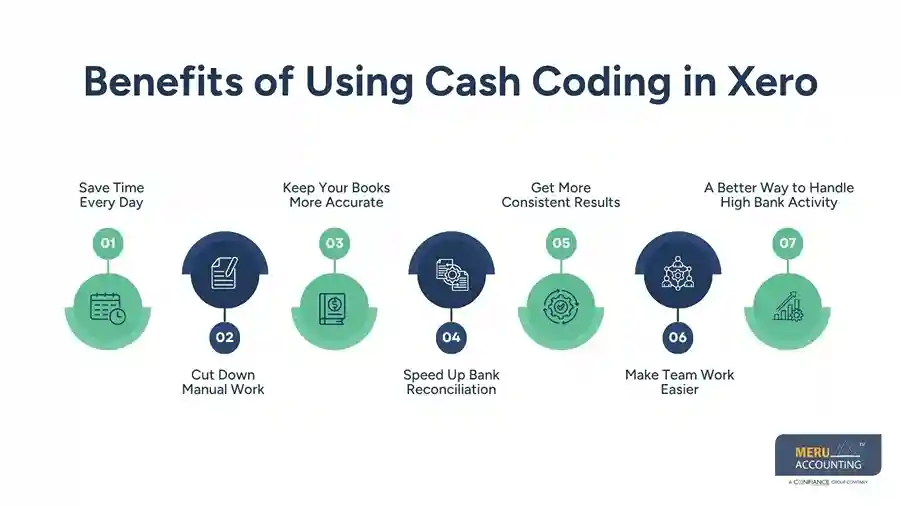
Get More Consistent Results
Many costs repeat each month. Rent, phone bills, fuel, office items, and software fees often use the same account. With cash coding in Xero, you can code these entries the same way every time. This keeps your reports clear and makes it easier to compare one month with another.
Make Team Work Easier
Many businesses have more than one person working on the books. Using cash coding helps everyone follow the same coding process. This creates more uniform records and reduces the need to fix coding later. It also helps new team members learn the bookkeeping process more quickly.
A Better Way to Handle High Bank Activity
As your business grows, so does the number of bank entries. Trying to code every entry by hand can slow your team down. Cash coding in Xero gives businesses a faster way to manage high bank activity without giving up control over their books.
Instead of spending hours on repeat work, you can spend more time checking reports, planning for growth, and helping your business move forward.
How Cash Coding Works in Xero: Step-by-Step
Once you know what is cash coding, the next step is learning how to use it. The process is simple and does not take long once your bank feed is set up.
Follow these steps to start using cash coding in Xero.
Step 1: Import Your Bank Entries
Before you can use cash coding, your bank entries must be available in Xero. Most businesses use bank feeds to import new entries each day. You can also import a bank statement if needed. After the bank entries appear in Xero, they are ready to be coded.
Step 2: Give a User Access to Cash Coding
Before someone can use cash coding in Xero, they must have the right access.
How to Give a User Access to Cash Coding?
In Xero, giving a user access to cash coding is a simple process. Follow these steps:
- Go to Settings and select General Settings.
- Under Organization, select Users.
- Select the user you want to give access to.
- Under Bank Reconciliation, enable the Cash Coding option.
- Save the settings.
And you’re done! The selected user can now access cash coding in Xero.
Step 3: Open the Cash Coding Screen
Once access is enabled, open the Cash Coding screen in Xero. The page shows many imported bank entries in one table. This layout makes it easy to move through each entry without opening separate pages. Instead of working on one bank line at a time, you can code many entries from a single screen.
Step 4: Group Similar Bank Entries
Look through your imported bank entries and find those that belong to the same account.
For example, you may have several entries for:
- Office supplies
- Fuel
- Phone bills
- Internet service
- Software
- Travel costs
Grouping similar entries helps you use cash coding more quickly and keeps your books consistent.
Step 5: Select the Right Account
Choose the correct account for each group of bank entries.
For example:
- Fuel → Motor Vehicle Expense
- Office Supplies → Office Expense
- Software → Software Expense
- Travel → Travel Expense
Using the right account keeps your reports clear and helps you understand where your money goes.
Step 6: Apply the Correct Tax Rate
After selecting the account, choose the correct tax rate for the selected entries.
Take a few seconds to check the tax rate before approving several entries at once. A quick review can help prevent errors that may affect your financial reports.
Step 7: Add Tracking Categories (If Used)
If your business uses tracking categories, assign them before approving the entries.
Tracking categories can help you report income and costs by:
- Department
- Location
- Project
- Team
Adding them during cash coding in Xero saves time later when you review reports.
Step 8: Check the Entries Before Approval
One of the best parts of cash coding is that you can review everything before approving it.
Take a final look at:
- Account codes
- Tax rates
- Payee names
- Tracking categories
- Bank amounts
This quick review helps keep your books accurate.
Step 9: Approve the Entries
Once everything looks correct, approve the selected bank entries. The approved entries become part of your accounting records and are ready for bank reconciliation and reporting.
By following these simple steps, you can use cash coding in Xero to process many bank entries in much less time than coding them one by one.
Tips to Get the Most Out of Cash Coding in Xero
Learning cash coding is only the first step. A few simple habits can help you save more time, keep your books clean, and reduce repeat work.
Here are some practical tips for getting the best results from cash coding in Xero.
Code Transactions Regularly
Do not wait until the end of the month to code all your bank entries. Reviewing and coding transactions every few days makes the work easier and helps prevent a backlog. It also gives you more accurate financial records throughout the month.
Group Similar Transactions
Before you start coding, look for transactions that belong to the same account.
For example, you can group:
- Office supplies
- Fuel expenses
- Utility bills
- Software subscriptions
- Travel costs
Grouping similar entries helps you work faster and keeps your books consistent.
Review Before You Approve
Although cash coding speeds up bookkeeping, it is still important to review every transaction before approval. Check the account, tax rate, amount, and payee details to avoid posting incorrect information. A quick review today can save time fixing errors later.
Keep Your Chart of Accounts Organized
A clear chart of accounts makes cash coding in Xero much easier. Remove unused accounts, use clear account names, and avoid creating duplicate accounts whenever possible. This makes it easier to select the correct account during coding.
Use Bank Rules Alongside Cash Coding
Bank rules and cash coding work well together. Bank rules can automatically suggest coding for recurring transactions, while cash coding in Xero lets you review and approve multiple transactions at once. Using both features creates a faster bookkeeping workflow.
Setting Rules and Making It Simple
You can make cash coding even easier by setting up bank rules while reconciling cash transactions. Bank rules help automate recurring transactions, reducing manual effort and making the reconciliation process faster.
Follow these steps to create a bank rule:
- Click the down arrow next to the transaction for which you want to create a bank rule.
- Click Create Bank Rule.
- On the Create Rule screen, enter the conditions to build the rule.
- Click Save.
You can create, edit, or remove bank rules at any time. Creating useful bank rules reduces effort and makes cash coding in Xero more efficient.
Learn the Keyboard Shortcuts
Using keyboard shortcuts can make cash coding even faster, especially when working with large numbers of bank entries.
Shortcuts in Cash Coding
There are several keyboard shortcuts that can help speed up cash coding.
- Press “+” to copy the account, tax rate, and tracking category from the row above to the current row.
- Press “/” to open the Quick Spend or Receive Money window, making it easier to split transactions.
- Other useful shortcuts include Shift + Down Arrow and Alt + Down Arrow.
Learning these shortcuts can make processing large batches of transactions much faster.
Process Transactions in Batches
If you have hundreds of bank entries, work on them in smaller groups instead of trying to finish everything at once.
Processing transactions in batches makes it easier to review your work and reduces the chance of mistakes.
Processing Large Numbers of Transactions
The reconciliation process becomes much faster using cash coding in Xero. You can reconcile up to 100 transactions at a time. If you need to reconcile more transactions, simply click More at the bottom of the page to load the next batch and continue processing.
How Meru Accounting Helps You Get More from Xero
Using cash coding can save a great deal of time, but getting the best results still depends on good bookkeeping practices. At Meru Accounting, we help businesses use Xero more effectively by setting up efficient bookkeeping processes that support accurate financial records and smooth day-to-day operations.
Our team works with businesses of all sizes and helps manage tasks such as bank reconciliation, transaction coding, account setup, financial reporting, and ongoing bookkeeping support. Whether you are new to Xero or already using cash coding in Xero, we help ensure your books stay organized and up to date.
By combining accounting expertise with modern cloud accounting tools, Meru Accounting helps businesses spend less time on manual bookkeeping and more time focusing on growth.
Our Expert Insight
We often hear new Xero users ask what is cash coding before they start using the platform. Once they begin using the feature, they quickly see how much time it can save during bank reconciliation. Many businesses start using cash coding because they want to save time, but the biggest long-term benefit is consistency. When similar bank transactions are coded the same way every month, financial reports become more reliable and easier to understand.
At Meru Accounting, we recommend using cash coding in Xero as part of a regular bookkeeping routine rather than waiting until month-end. Coding transactions throughout the month, using bank rules where appropriate, and reviewing entries before approval can greatly improve both speed and accuracy. Businesses that follow these simple practices often find month-end reconciliation easier and spend less time correcting bookkeeping errors.
Key Takeaways
- Cash coding helps accountants, bookkeepers, and businesses code multiple bank transactions at one time.
- Cash coding in Xero reduces manual work and saves valuable bookkeeping time.
- Bulk coding helps improve consistency across your financial records.
- Reviewing transactions before approval helps reduce coding errors.
- Bank rules and keyboard shortcuts make the process even faster.
- Regular bookkeeping keeps bank reconciliation simple and your reports more accurate.
- Professional bookkeeping support can help you get the most value from Xero’s features.
FAQs
Cash coding in Xero is a feature that allows users to code multiple imported bank transactions from one screen instead of processing each transaction individually. It helps save time and improve bookkeeping accuracy.
Cash coding is useful for small business owners, accountants, bookkeepers, and finance teams that manage a large number of bank transactions.
No. Bank rules and cash coding serve different purposes. Bank rules help automate recurring transactions, while cash coding in Xero allows users to review and process multiple transactions before approval.
Yes. One of the main benefits of cash coding in Xero is that you can review account codes, tax rates, and other details before approving transactions.
Meru Accounting provides Xero bookkeeping services, including bank reconciliation, transaction coding, financial reporting, account management, and ongoing bookkeeping support. Our team helps businesses use cash coding and other Xero features to maintain accurate, up-to-date financial records.
optional anymore
on running the business